TECHNOSYMBIOSIS
Between Code, Body, and System
With works by Dagmar Schürrer and Jess Tucker
Curated by Peggy Schoenegge (peer to space)
Location: Austrian Cultural Forum Berlin, Stauffenbergstraße 1, 10785 Berlin
Duration: September 12 – October 31, 2025
Opening: September 11, 2025, 7 pm
Artist Talk: October 23, 2025, 6 pm
Our perception, relationships, and bodies are constantly influenced by various technological applications – from interactive platforms to generative Artificial Intelligence (AI) and algorithmically personalized information. These code-based systems shape how we communicate, behave, and perceive the world. As human and technology entangle, our understanding of what it is to be human changes.
The duo exhibition TECHNOSYMBIOSIS makes this transformation tangible. Dagmar Schürrer questions the traditional separation between nature and culture. Her hybrid visual worlds explore the complex interplay between humans and technology within collective use. This results in a symbiotic relationship that highlights mutual dependency. Jess Tucker also examines this dynamic: through AI and machine learning, she creates distorted self-portraits that depict the body as a flexible, ever-changing entity. Her morphing figures cut the self loose from rigid representations, repurposing computational tools to dissolve the boundaries of embodied identity and its surrounding environment.
The works in the exhibition create a hybrid space of experience that reflects the nature of our present. In the post-digital age, human and technology are inseparably connected – they mutually condition and influence each other. The human being is no longer viewed as an isolated subject but as part of a dynamic system that continuously reshapes itself in exchange with its technologized environment. Thus, digital media become a fundamental element of our existence and our being.
TECHNOSYMBIOSIS invites visitors not only to become aware of this symbiosis between human and technology but to actively participate in it. The exhibition encourages reflection on one's role within the network of relationships between code, body, and system, and urges visitors to shape it consciously and independently. How do we want to understand ourselves as humans in a technologized world?
Image credits: Philipp Gaiko
About the works:
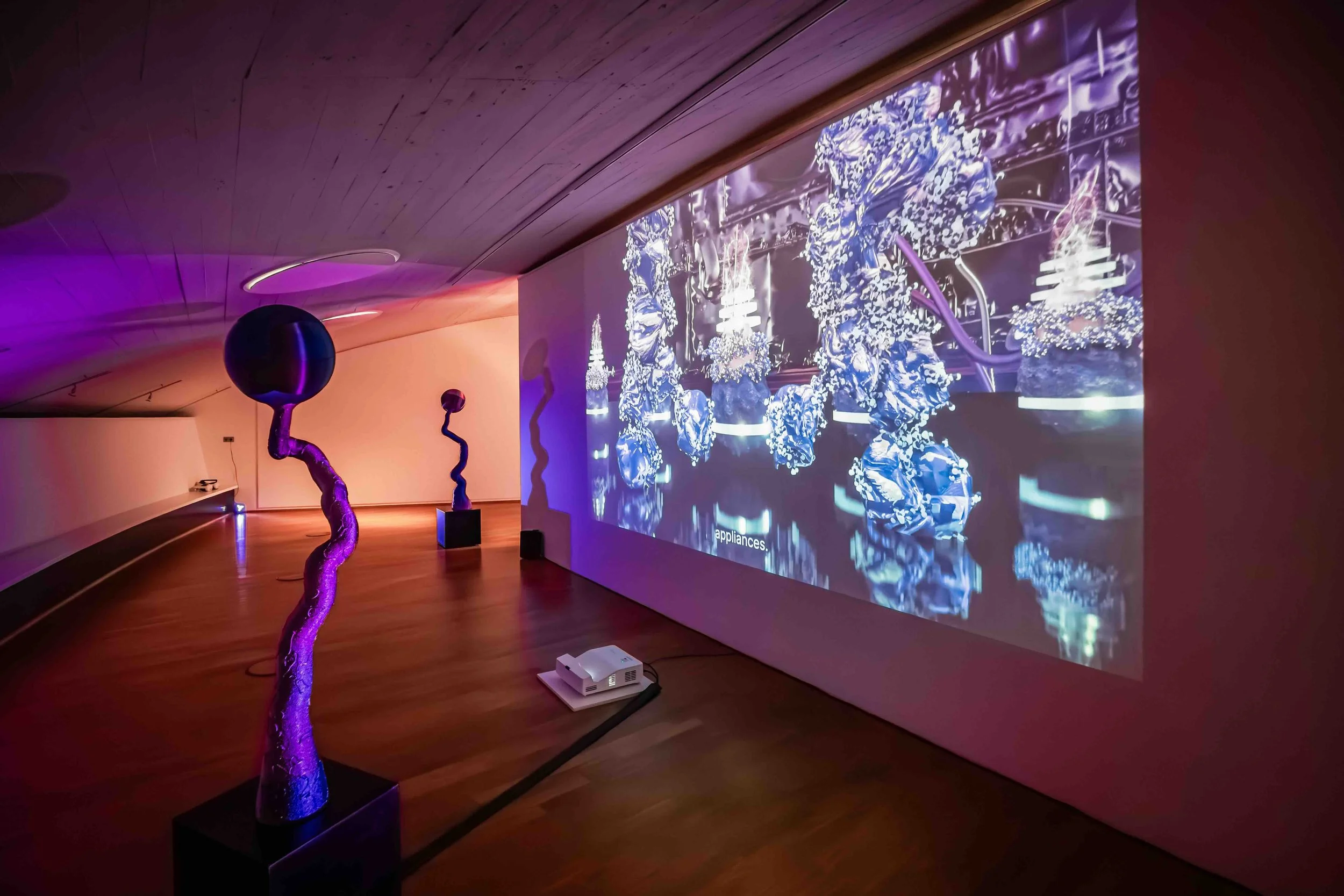
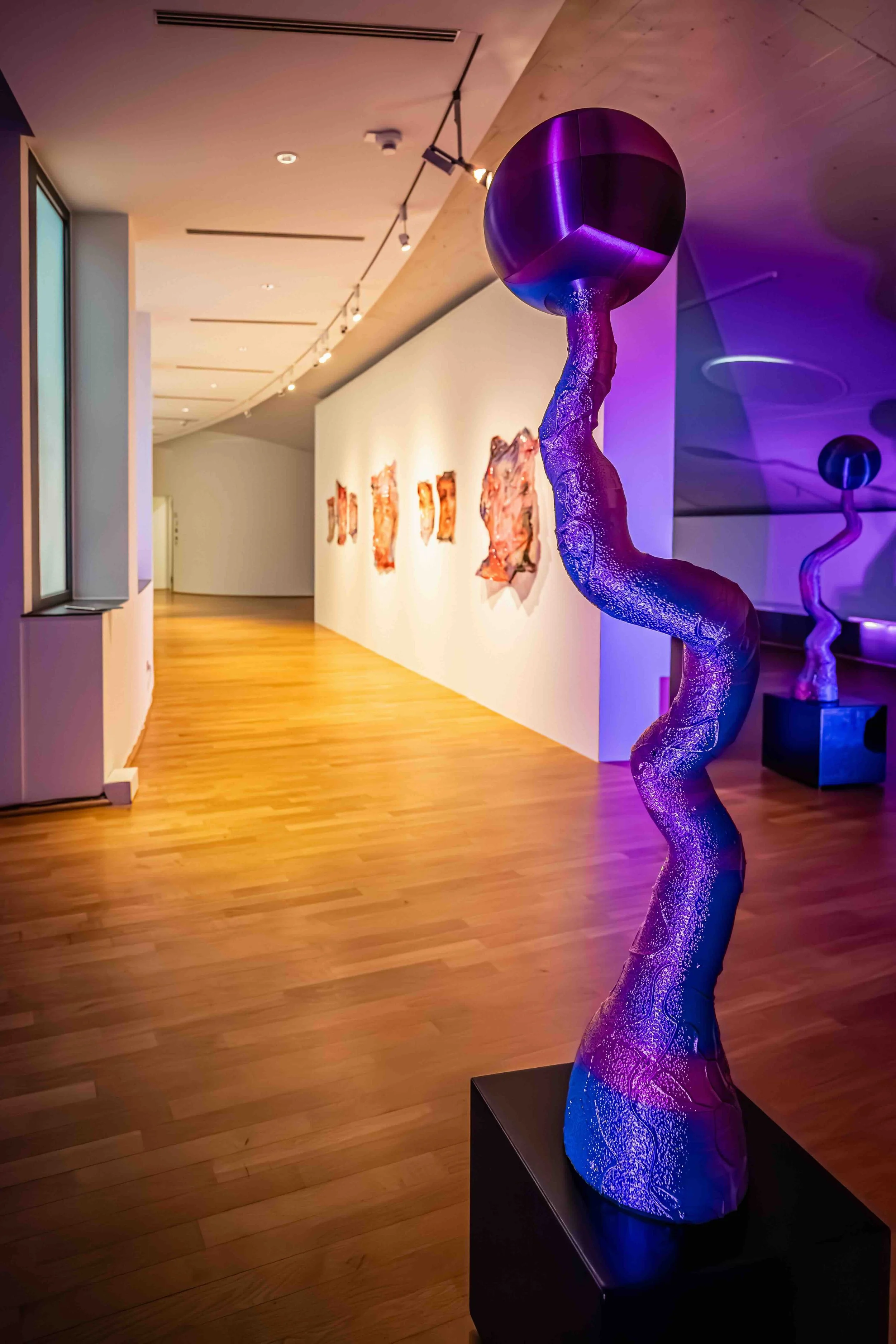
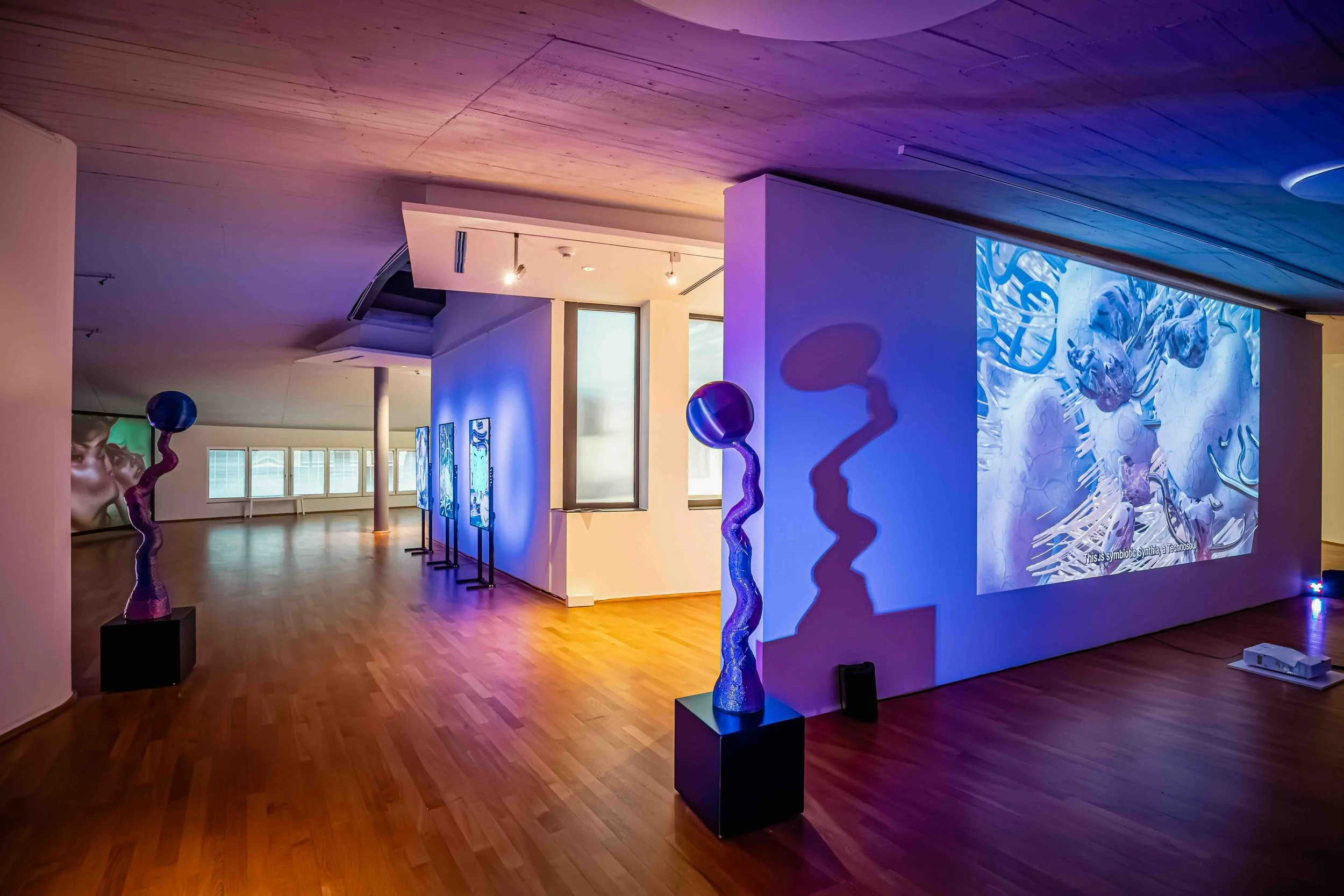
Dagmar Schürrer, Where does the rest of the world begin?, 2024, Animation, 3D prints, Mixed Reality experience
Dagmar Schürrer reflects with her latest body of work »Where does the rest of the world begin?« (2024) on the deep entanglements of human consciousness, natural environment, and current technology. The multimedia installation consists of a digital animation, 3D prints and a Mixed Reality experience. The artist creates a spatial narrative in which she poetically links the scientific concepts of symbiosis and neural synchrony, which she applies to our existence in the postdigital age. Both theoretical approaches highlight the interconnectivity of all organic and non-organic agents. Concepts of individuality, singular consciousness, and subjectivity are thus called into question. It demonstrates how our increasing interactions with new technologies shape and redefine our understanding of what it means to be human,
Dagmar Schürrer, CHIMERA I-III, 2024, Animation, AR experience
CHIMERA I – III is a series of three hybrid monitor sculptures of short 4K animation loops extended by an AR application. The digital animations resemble traditional still lifes, depicting elements of technological and natural origin. The images gently move and are being transferred into the physical realm by extending them through AR. The custom-built AR application dissolves the boundaries of the screen and its surrounding space, through which a hybrid reality is being created. Visitors are invited to actively interact with the digital work and explore the sculptures spatially.
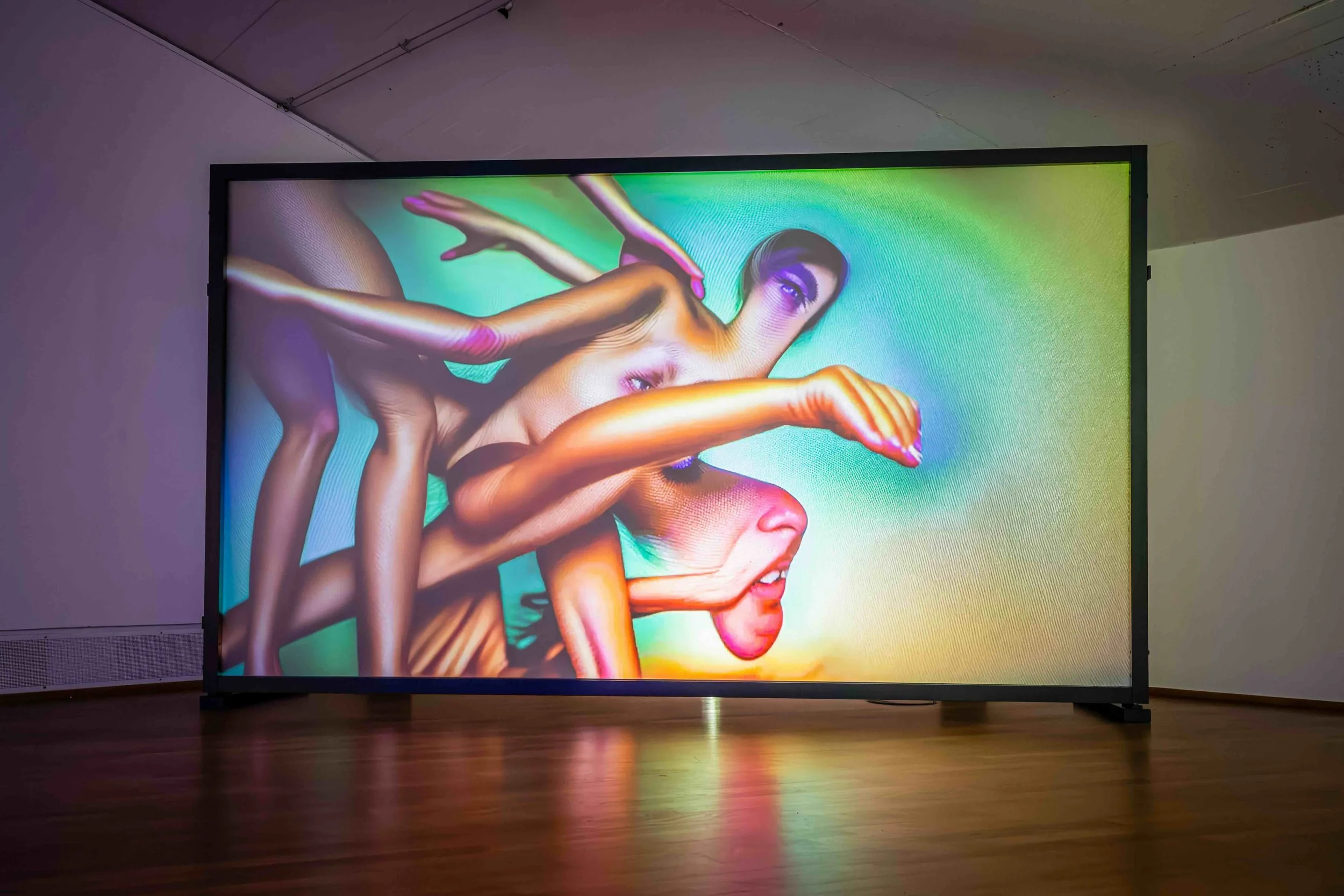
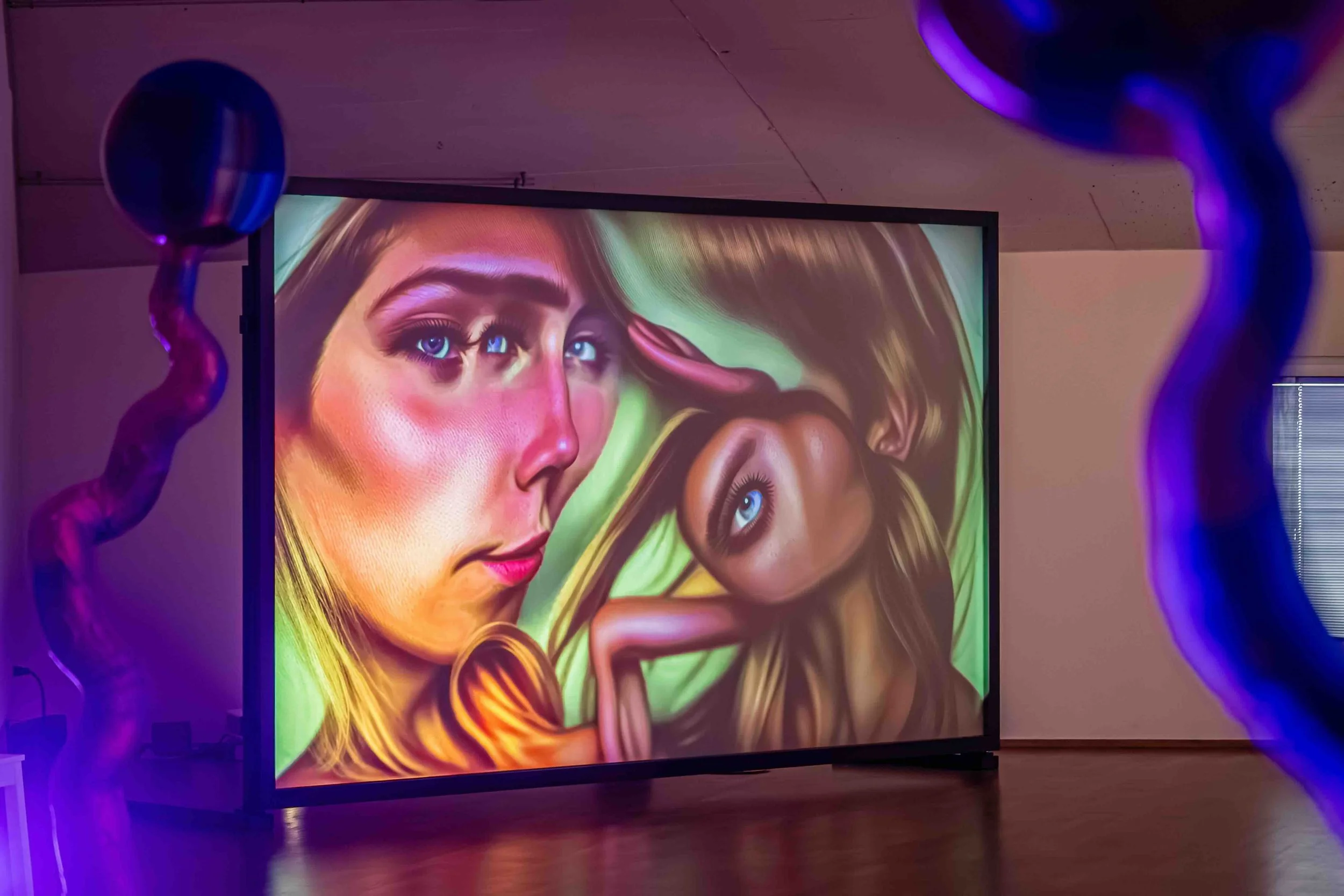
Jess Tucker, against all odds and gravity, 2025, video, 4:26
Intertwined bodies become moving faces. This animation is based on motion data from a pas de deux with a life-size ragdoll, whose movements defy every norm and intention. This inconsistent data is translated to animate two faceless digital bodies. Tucker inserts a third digital body into the animation, which becomes unsure of which motion data it should follow. The resulting figures are both desperate and defiant, hypnotizing and disruptive within a peculiarly tactile space of the screen. An ambivalent image emerges that reveals everything and nothing at the same time, challenging predictive perception and the desire to see. It blures the boundaries of the embodied human, and reclaims agency in an age of overexposure, automated voyeurism, and normalized surveillance.
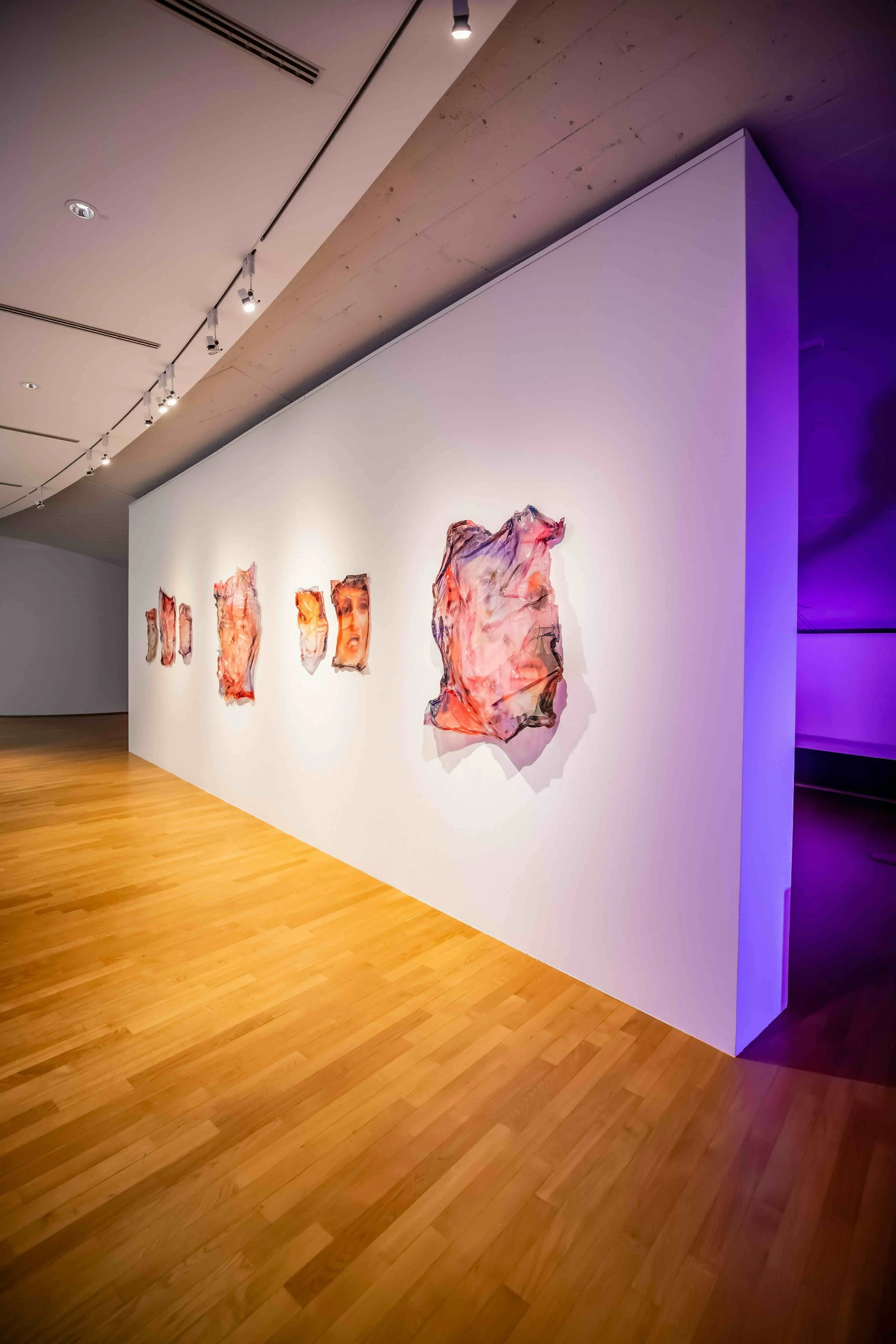
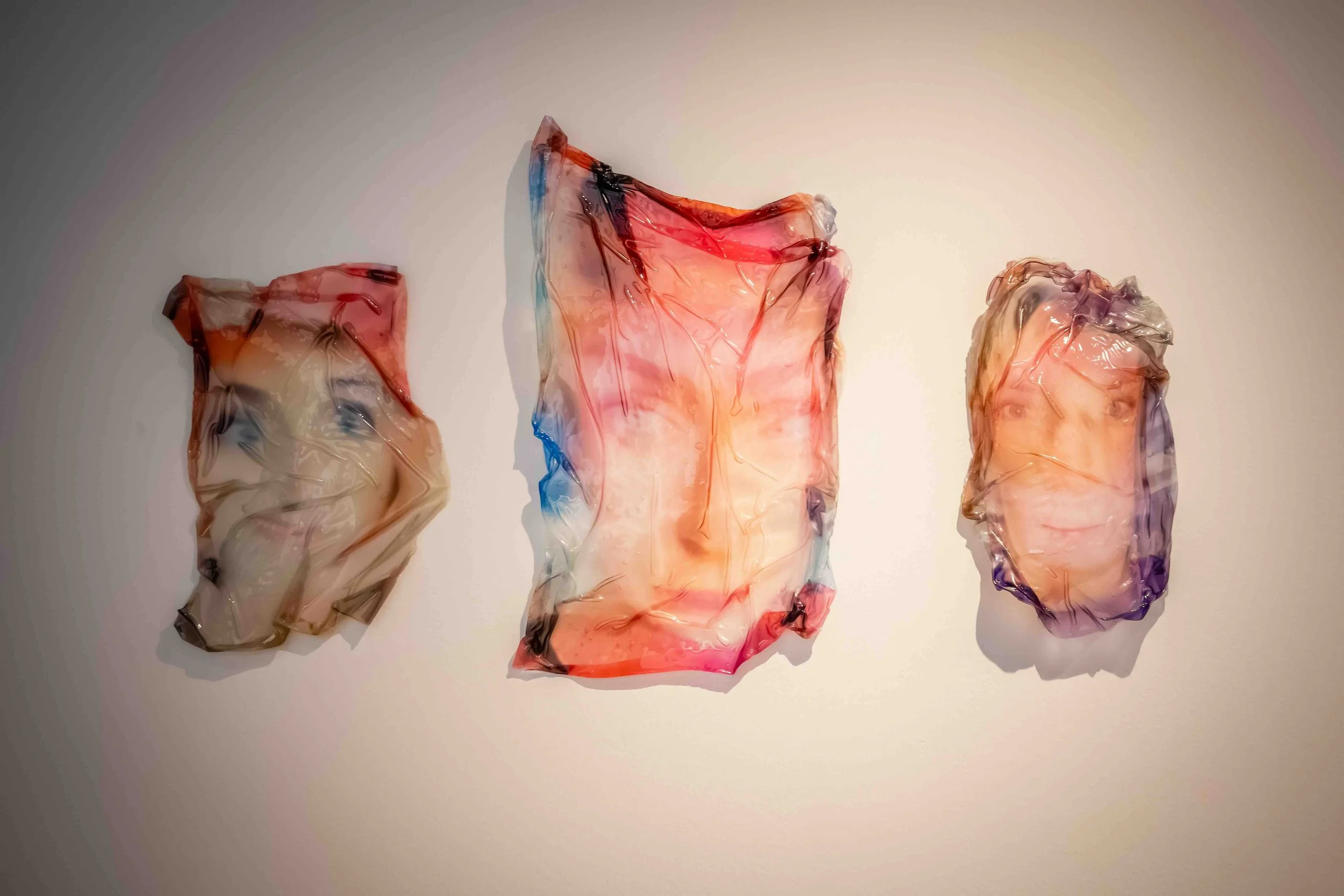
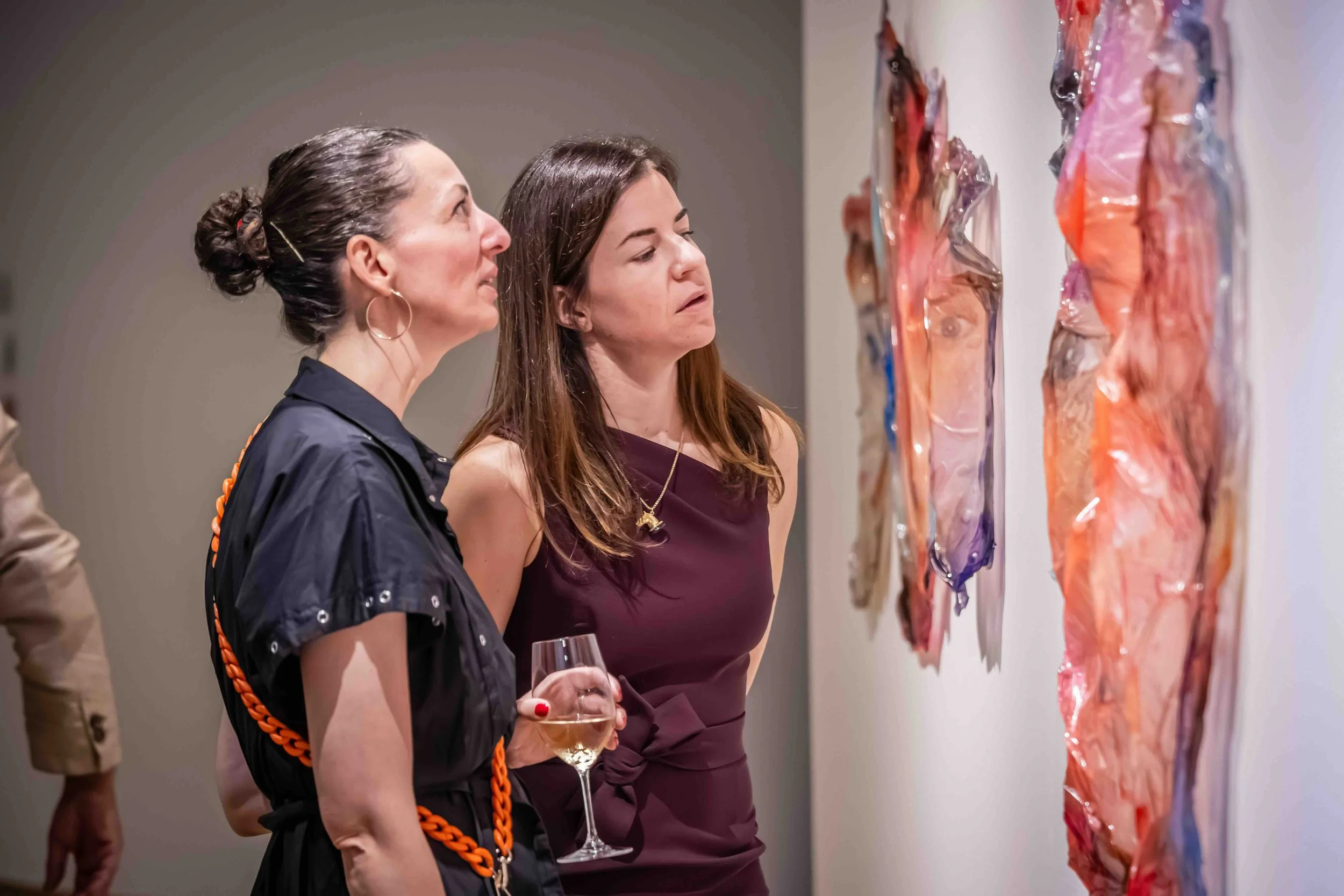
Jess Tucker, something other than a shroud, 2022 – present, Digital image collages on fabric, resin
These fabric and resin sculptures are a material translation of distorted facial images made through a recursive glitching of face-swapping apps. They seem suspended in motion, fluid, in the middle of a silent virtual scream or eruptive laughter. Tucker’s wall works lend new materiality to digital images she produced through a rigorous misuse of face-swapping apps. Settled within the hardened fabric surfaces, they become fixed and yet remain connected to an elsewhere, a gesture towards something not quite graspable, something after, but something other than an ending.